

Founder of Camera Magica, Frédéric Laffont chronicles the world with a handheld camera and an open heart. This page invites you to discover his career, his commitments, and what inspires his documentary filmmaker's perspective.
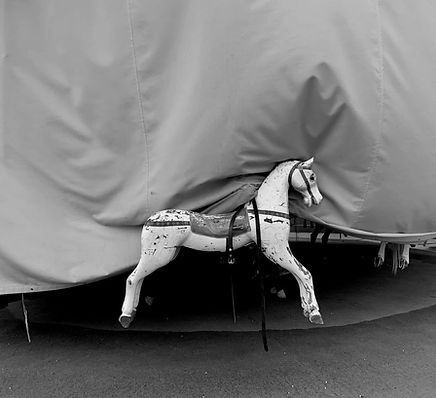
Merry-go-round rides
then world tours.
Around sixty films:
major reports and documentaries.
Albert Londres Prize
for a report on the war in Lebanon.
A collection of short films
for Hermès.
A feature film shot in Ukraine
since 2022.
Literary essays written in Paris,
Jerusalem, Kigali and Kabul too.
Frédéric Laffont
His documentaries have the strange beauty of Pasolini's early films. L'Express
A rare filmmaker. Le Nouvel Obs.
Selected filmography
2025, long-métrage cinéma.
2025, Collection d'Hermès de courts-métrages.
France, 2022. FIPADOC 2022.
Inde, 2019.
Belgique, 2017. Étoile SCAM.
Texas, 2015.
Jura suisse, 2014.
Liban, des guerres
et des hommes
(série 3 x 52’) FIPA & Étoile SCAM, 2014.
Texas, Étoile SCAM 2013.
France, 2011.
Burkina, Mali, Inde, USA, 2009. FIPA 2010.
Voyage au centre
de la Bibliothèque
Paris, 2007.
Israël-Palestine, Étoile SCAM 2007.
Japon, 2004.
Israël-Palestine, Prix Festival d’Angers 2002.
France, 2001.
Fleur de Cannelle
Chili, 2000.
Grand Prix Ptolémée de Géographie, 2000.
France, 1998.
USA, Bosnie, Jérusalem, 1997.
Louisiane, Prix Saulieu 1996.
France, 1994.
USA, 1994.
France, 1994.
Rwanda, 1996. Grand Prix Angers et Écran d’Or Montréal 1996.
Dieu, poste restante, Jerusalem
Jérusalem, 1993.
France, Grand Prix Palerme, 1994.
France, 1993.
République tchèque, 1993.
Beyrouth,des balles
et des ballons
Nymphe d’Or & Prix critique internationale
Festival Monte-Carlo, 1993.
Afghanistan, URSS. Grand Prix Angers
& Festival Rueil, 1990.
Monde, 20 ans MSF, 1992.
Prix Spécial Festival Int. Monte-Carlo, 1992.
Autofolies
France, 1990.
L’opium du peuple
URSS, 1988.
Colères noires
de Soweto
Afrique du Sud, 1988.
Chili, 1988.
Pas de larmes
pour Mao
Chine, Meilleur Reporter d’Image, 1987.
Liban, Prix Albert Londres, 1987.
La mer arrive encore au Liban
Prix du jury Festival Monte-Carlo, 1987.
Chine, 1985.
Each of these films tells a story, a perspective, a part of truth.
Through Camera Magica, Frédéric Laffont continues to capture humanity in its most fragile and luminous form.
His career demonstrates a loyalty to commitment, to the right emotion, to a story that moves.
And behind each image, always the same intention: to film with the heart.
